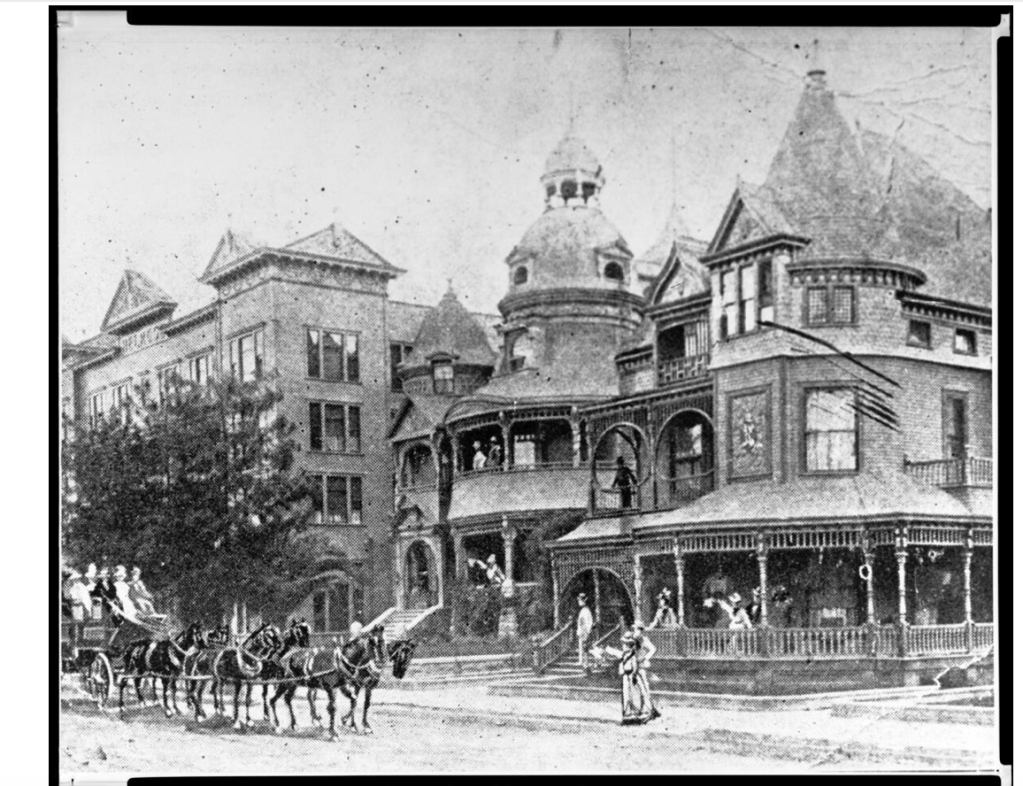
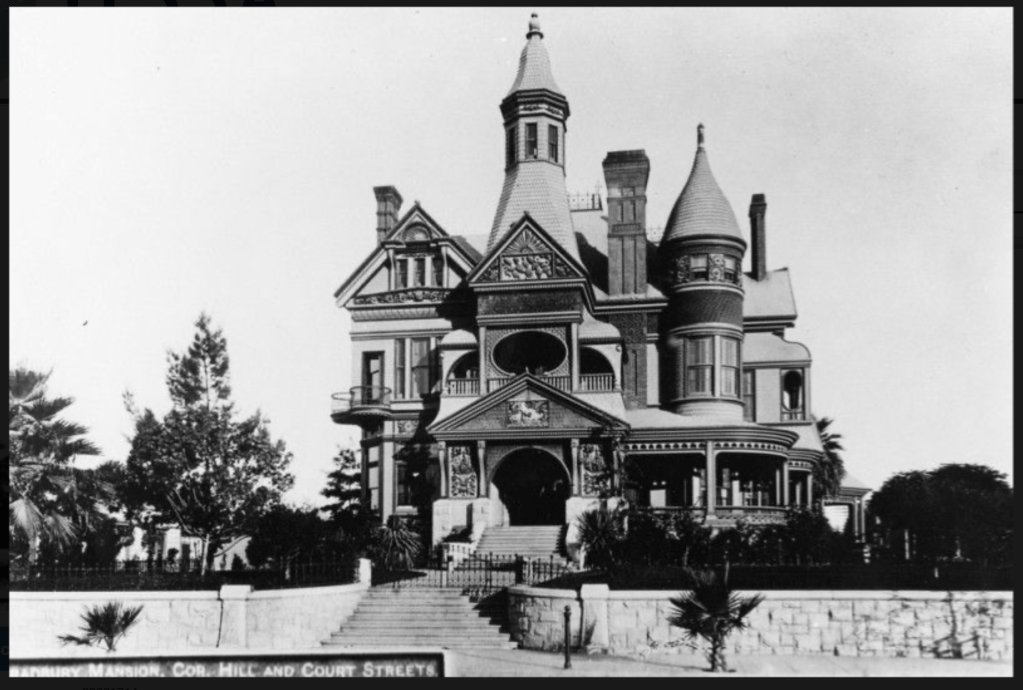
This weekend, we took a walking tour of Bunker Hill. I am writing a novel called Rancholand, set across three periods in Los Angeles. One section takes place in 1905, and my character’s work brings her to Bunker Hill. The problem is that nothing remains of Victorian and Edwardian Bunker Hill. I must build it from imagination.
Last month I saw that Esotouric was offering a Bunker Hill tour. I signed up and asked my husband Charlie to come along. He said yes.
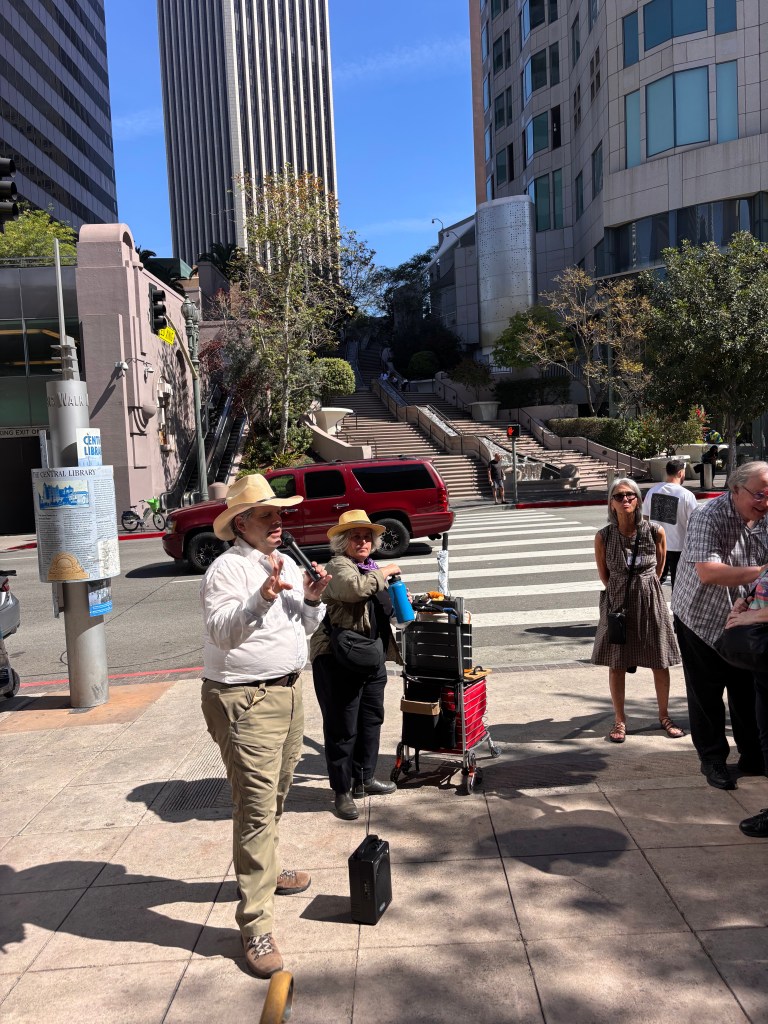
Company owners Richard and Kim, along with Nathan Marsak, who has written books about Bunker Hill, were excellent guides. At one point I joked with Richard, “I’m enjoying the tour slash theater.” It felt true. They spoke with us and with each other. One would begin with a detail, then turn to another. “Before I explain this tunnel, Kim, tell everyone what is under their feet right now.” The ground itself became part of the story.
I will not try to cover the full Bunker Hill history. There are many sources on the rise, the early decline, the morphing of the neighborhood, and the final removal of Bunker Hill.
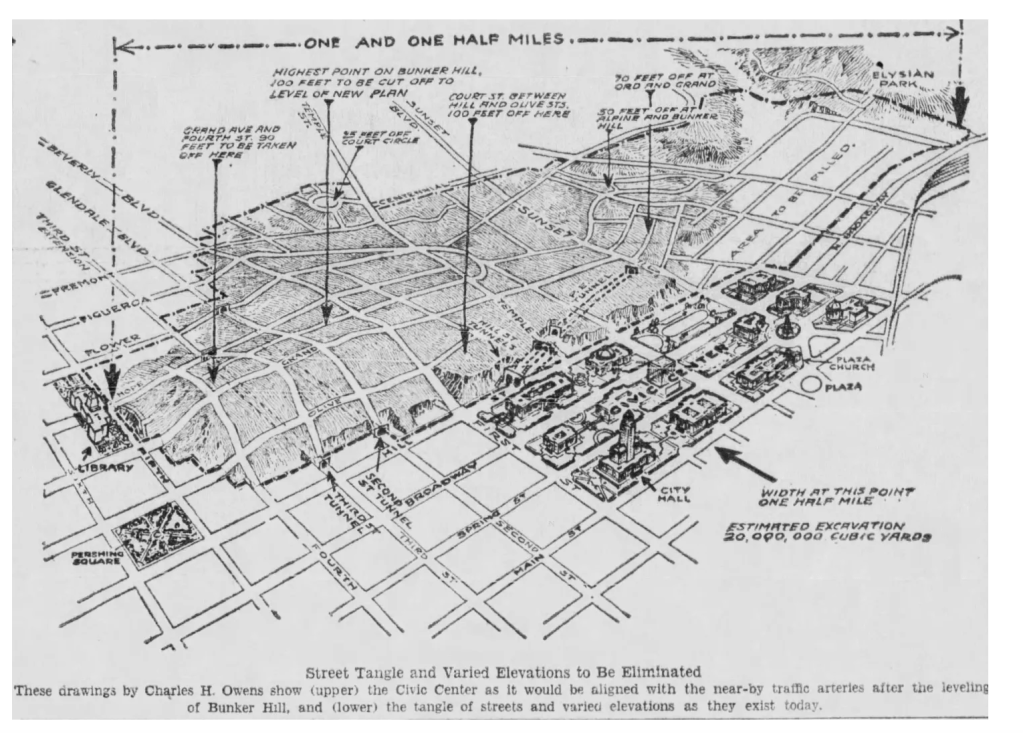
But starting in 1959, more than 7,000 residents were displaced through eminent domain, all part of that mid-century favorite expression, urban renewal. Those words have not aged well. We know them now as a sanitized version of something harder to say. It meant removing poor, limited-income, aging residents, many of them people of color, from a community they knew well and loved. The hill was cleared. The people were gone. In their place came the Music Center and high-rise office buildings. There are books and archives that document it, but there is also an ache that lingers for many Angelenos, even those born long after the hill was flattened both figuratively and literally.
The Esotouric guides were sharp and generous with their knowledge. They built a vivid picture of the place. But there was another voice on the tour that stayed with me.
Gordon Pattison grew up on Bunker Hill; in a house his grandmother bought in 1937. His grandmother died while his father was away in World War II. When his father returned, he came home to a wife, a baby son, Gordon, and a Bunker Hill house to run.
The historians gave us structure and detail. Gordon gave us memory.
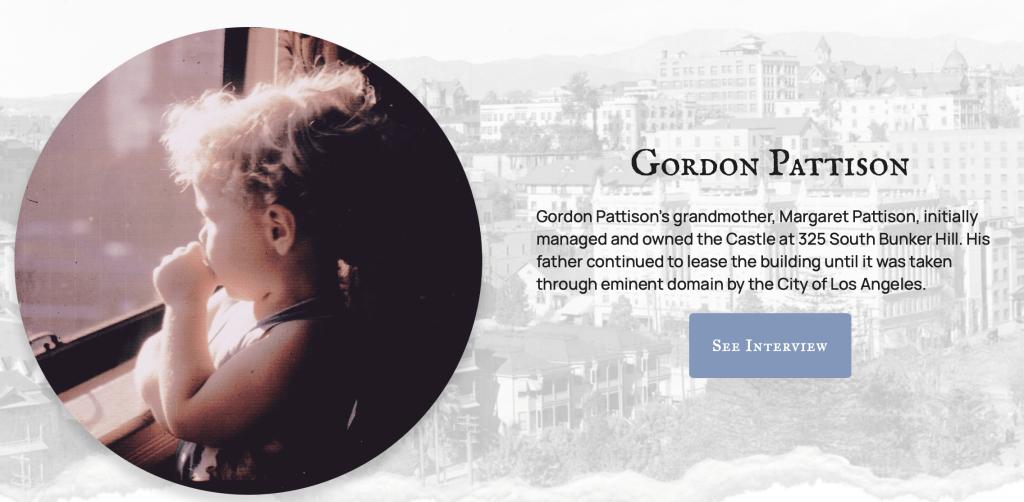
He spoke about looking out the window as a boy. The view from the hill. The men who sat on benches, retired, living modest lives with neighbors they knew well. He walked down the steps to the library with his parents and checked out books. They walked along Broadway to see plays and movies.
The hill itself had already changed. The grand Victorian houses, built in the 1880s and 1890s, had lost their original purpose as wealth moved west to Adams, University Park, later Hancock Park and Beverly Hills. The houses were divided into rooms and boarding houses. What remained was a dense, working community, somewhat cut off and easier to dismantle when the city decided to reshape the land.
All of this can be found in books. Hearing it from Gordon was something else.
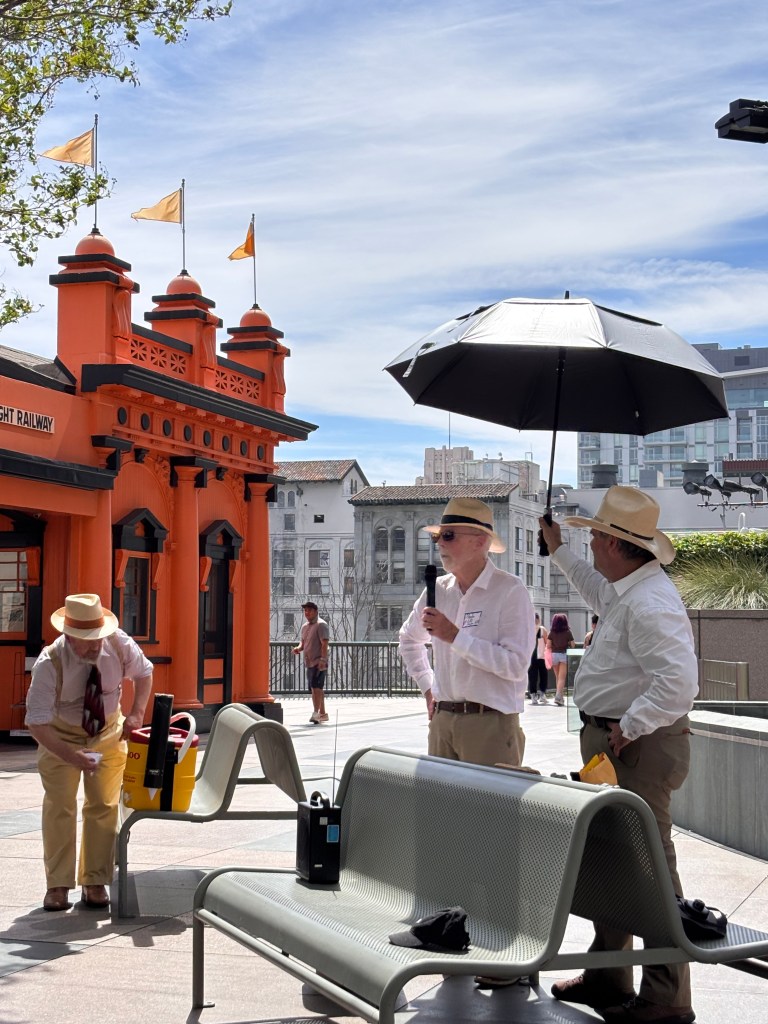
He did not speak with only sorrow, there was simple joy. He spoke in fragments. Walking to the cleaners. The drugstore where his father had his first job. Small moments carried forward. As he talked, I thought about people who inherit stories and feel a duty to pass them on. Children of public figures. Families tied to places or work that shaped a city. They become caretakers of memory.
Years ago, I produced a centennial event for my son’s elementary school, West Hollywood Elementary, which was once called the Sherman School. We invited Eric Lloyd Wright, grandson of Frank Lloyd Wright. He told me he had fond memories of the school. He could not attend our event because he was traveling for a celebration of one his grandfather’s buildings. I emailed him, “Oh that Frank, getting in my way.” He said he would rather be with us, but he had to go. Later, my friend and I gave him a private school tour, took him to lunch, and drove him through the neighborhood so he could see his old home on Doheny. He was in his eighties. He had his own mistiness.
Watching Gordon speak reminded me of Eric. Both began as boys inside a place that would outlast them in memory. Both carried something forward over decades. The difference is that Eric has those cherished buildings of his grandfather. Gordon has no structure to point to. No building remains. He stands as a witness.
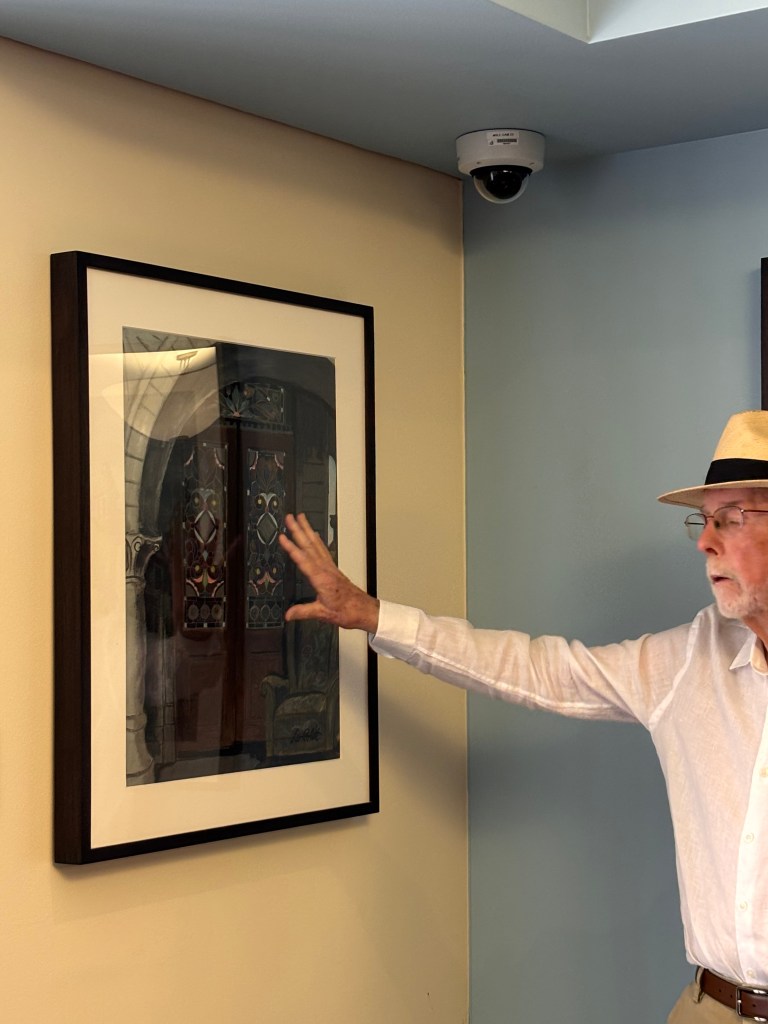
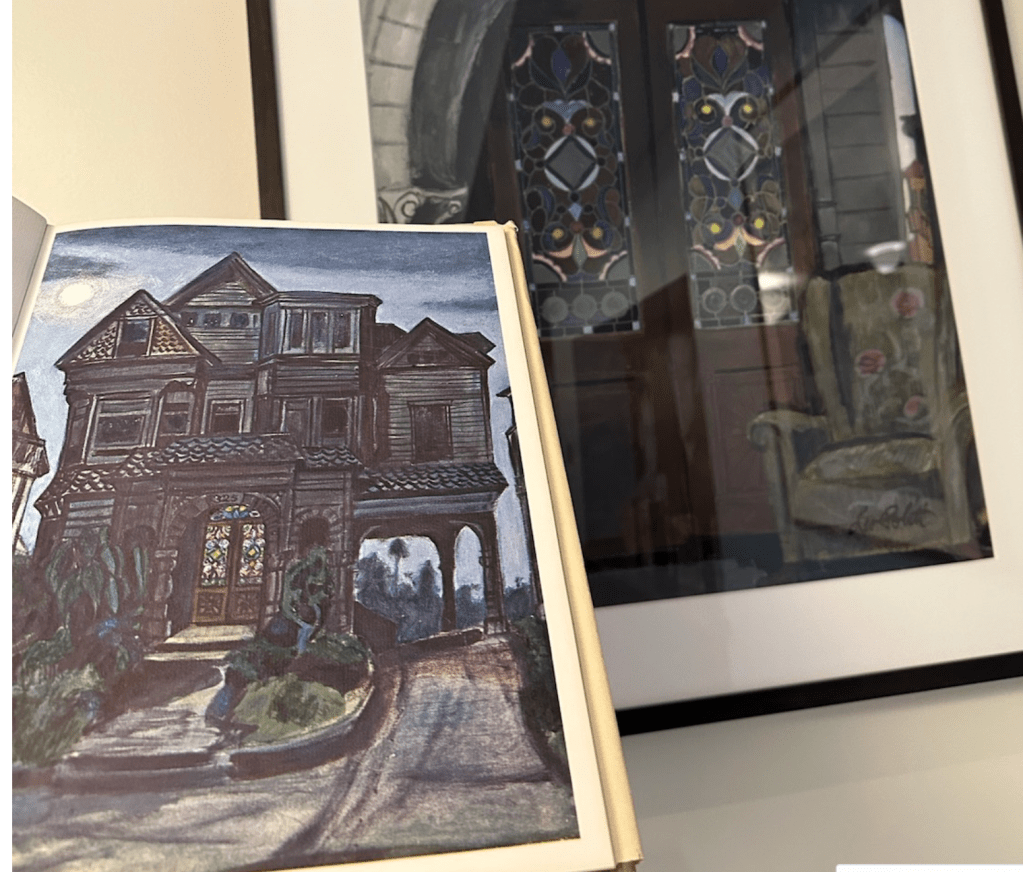
Inside the Central Library, we entered the children’s wing, where Leo Politi’s paintings of Bunker Hill line the walls. I studied them. They are beautiful. Gordon pointed out his home, painted by Politi, known as the Castle. In another painting, an older woman feeds a cat in her yard. Gordon told us that when she was forced to leave, the stray cats stayed behind, confused. I still do not know what happened to them.
These stories feel necessary. The present can feel unstable. Things shift fast. It is easy to lose a sense of continuity. Walking up Grand Avenue, seeing Disney Hall while holding the ghost image of the Melrose Hotel across the street, listening to Gordon describe cats in a yard, or pigeons fed at a bench, I was reminded that moments matter. Stories matter.
At the end of the tour, at the top of Angels Flight, Kim spoke about the tall office towers around us. They sit mostly empty. They never had full occupancy, even in their salad days. She asked what it would take to bring people back to the hill. The malls are there and could be filled with shops. The buildings have space. What if they were converted into housing? It would take vision, and a belief that a place is more than land.
I believe it will take stories.
Check out Esotouric and gather stories on their other tours. For more information on Bunker Hill, search the archives. Students and faculty at USC, led by the Ahmanson Lab, are developing a web-based experience of historic Bunker Hill. You will find more tales from people who once called Bunker Hill home.
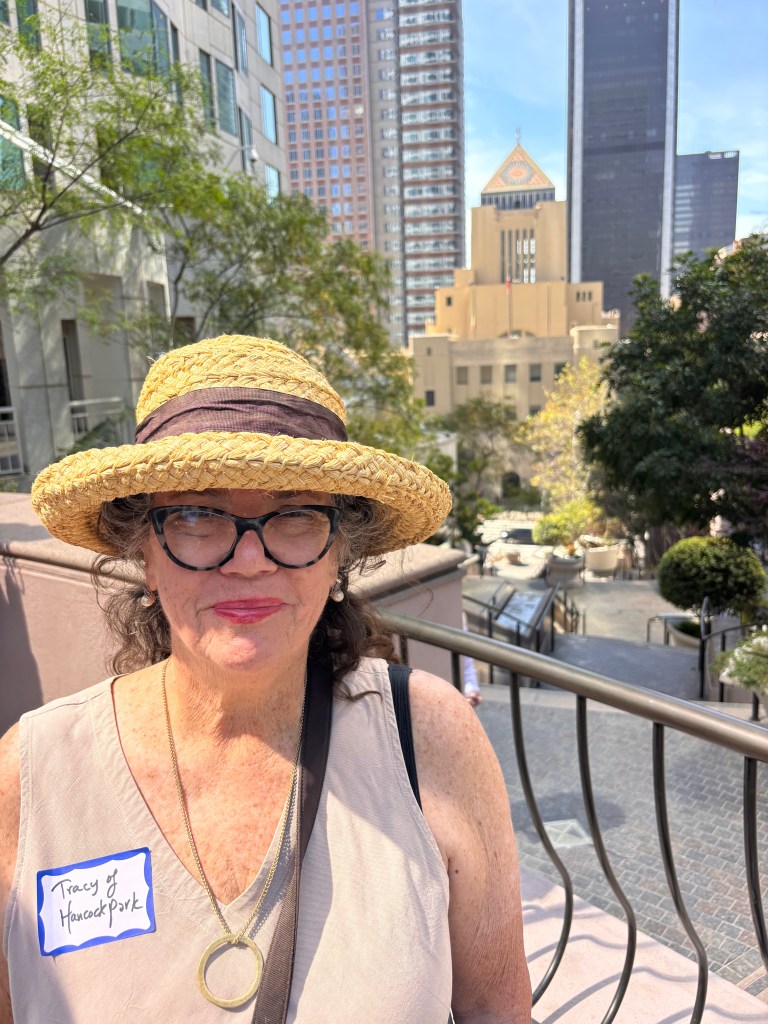
 Rancho Land
Tracy this is incredible. And did you know Ray Cortines used to own one of those beautiful homes
LikeLike
Before 1959? He seemed too young to be able to do that but I may be confused about his age.
LikeLike
if you’re interested in LA history;
https://www.adsausage.com/los-angeles-photography-archive
LikeLike
Love it, Tracy! So evocative of the ghosts – architectural, human, and even feline!
Xo Caryn
LikeLike
If anyone’s interested in LA history (inc. Bunker Hill), there’s a ton of original photos here. Saw this yesterday. And its free to access.
https://www.adsausage.com/los-angeles-photography-archive
LikeLike